

5·
2 months agoThe study seems to suggest those 2% are more so generic facts rather than particular initiatives or changes
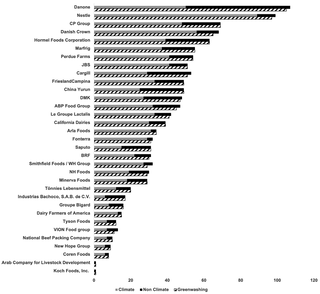
Out of the 1,233 environmental claims, 20 (<2%) did not contain indicators of greenwashing (S1 Data). These claims were generally neutral and verifiable, such as “in the United States alone, 30–40% of food produced is never consumed” [32, p. 36], a statement supported by the U.S. Department of Agriculture (USDA) [33]. Rather than emphasizing specific initiatives, these claims often focused on broader market, industry, or company trends.
EDIT: which is not to say that other generic facts can’t be misleading or twisted, just that these specific 2% weren’t

















>>> print("proof by counterexample in a python REPL")
proof by counterexample in a python REPL
>>> x = 2; print(x)
2
>>> print("this is not ignored"); print("it's just mostly useless"); print("but you can use as many as you want")
this is not ignored
it's just mostly useless
but you can use as many as you want