• 9 Posts
  • 26 Comments
Joined 3 years ago
cake
Cake day: November 30th, 2023

help-circle


  • That strain is now spreading into every corner of the consumer market as prices rise for materials like plastic, rubber and polyester. The impact is so far most evident in Asia, which accounts for more than half of the world’s manufacturing and is heavily reliant on imports for oil and other commodities.

    In South Korea, where people have been panic-buying trash bags, the government has encouraged event organizers to minimize use of disposable items. Taiwan has started a hotline for manufacturers that have run out of plastic, while its rice farmers told local media they may hike prices because they can’t get vacuum-sealed bags.

    In Japan, the oil crisis has sparked fears that patients with chronic kidney failure won’t be able to get treatment due to a lack of plastic medical tubes used in hemodialysis. Malaysian glove manufacturers say a dearth of a petroleum byproduct needed to make rubber latex is threatening global supplies of medical gloves.


  • It’s really worth reading: https://hntrbrk.com/demining-hormuz/ which TWZ references regarding the demining.

    The ending is below as I just had to shake my head and slap my face.

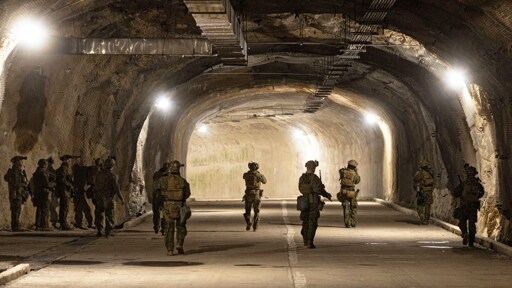
    The Washington Institute estimated years ago that clearing the Strait of Hormuz of mines could require “up to 16 MCM vessels.” The Navy has seven. Iran has an estimated 5,000 to 6,000 mines and, according to U.S. intelligence in conversations with CNN, still retains “80% to 90% of its small boats and miners.”

    The brief covered a recent MCM Advanced Tactical Training program, the final pre-deployment mine warfare assessment for LCS crews.

    Some key findings:

    Unreliable unmanned systems. Each Fleet-class USV mission requires over four hours of “pre-mission maintenance” and “1.5 hours of GPS/sonar calibration once launched,” according to the presentation. Multiple hunt missions were conducted where the sonar simply failed to record data — and crews didn’t know until the post-mission analysis. This is especially damaging during reacquire-and-identify missions, exactly the kind of work needed to clear a minefield.

    Operators have responded by shortening mission times, which defeats the purpose of using unmanned vehicles in the first place. One pre-deployment exercise with the USS Tulsa off the coast of San Diego resulted in a runaway MCM USV near Mexico’s territorial waters that could not be recovered by the mothership LCS. “Literally, the practice minefield I use is 1 mile north of the US-Mexico maritime border, and there’s a good chance that that UUV drifts or decides to go off on its own. I’m going to get demarched by the Mexican government,” said the leader of the U.S. Navy’s Mine Countermeasures Technical Division. The USVs themselves act as a handicap to minesweeping, with a short bandwidth range forcing the mothership LCS to operate near or inside minefields to maintain visual range to the USV’s antennas.

    Visual identification doesn’t work. U.S. MCM doctrine requires a camera to visually confirm mines — the AQS-20 has to drive directly over a bottom mine. But even the relatively clear waters off Southern California have defeated this approach. In the turbid, shallow, current-swept waters of the Persian Gulf, the problem would be far worse. The officer’s conclusion: The Navy needs to adopt high-granularity sonar identification, as other navies already have.

    Critical single-point failures. The platform lift between mission bay and hangar, the BIT test laptops for the USV/ALMDS/AMNS, the twin boom extensible crane, and the payload handling systems are all single-point failures with no spares or redundancy aboard. If any one of these breaks, operations stop. When describing the deployment arm, the Navy mine countermeasures lead said, “It is a troubling system. It is highly complex for what it does, and when it breaks, I’m out of a job, I’m out of a mission.”

    Multi-mission dilution. The LCS was designed as a multi-mission platform. The addition of Naval Strike Missiles and pressure to support visit, board, search, and seize operations means crews have less time to build and maintain MCM proficiency. “So now my ship with an LCS mission package may not necessarily be practicing MCM.” The LCS platform is also being experimented on as a long-range strike platform. The director’s own conclusion: The LCS will always struggle to match a dedicated MCM vessel.


  • “Mosaic defence” is an Iranian military concept most closely associated with the Islamic Revolutionary Guard Corps (IRGC), particularly under former commander Mohammad Ali Jafari, who led the force from 2007 to 2019.

    The idea is to organise the state’s defensive structure into multiple regional and semi-independent layers instead of concentrating power in a single command chain that could be paralysed by a decapitation strike.

    Under this model, the IRGC, the Basij, regular army units, missile forces, naval assets and local command structures form parts of a distributed system. If one part is hit, others keep functioning. If senior leaders are killed, the chain does not collapse. If communications are severed, local units still retain the authority and capacity to act.

    The doctrine has two central aims: to make Iran’s command system difficult to dismantle by force, and to make the battlefield itself harder to resolve quickly by turning Iran into a layered arena of regular defence, irregular warfare, local mobilisation and long-term attrition.

    That is why Iranian military thinking does not treat war primarily as a contest of firepower. It treats it as a test of endurance.


  • In the request, Tri-State and Platte River say they’ve built sufficient solar and wind farms, and no longer need Craig 1. By forcing the power plant to stay open, the plant owners say they’ve been forced to buy coal and invest in maintaining the facility, unnecessary expenses that amount to an “uncompensated taking” of their property in violation of the Constitution.

    The U.S. Department of Energy declined an interview request for this story. In an emailed statement, Caroline Murzin, an agency spokesperson, said the U.S. needs vast amounts of additional electricity generation to support domestic manufacturing and the ongoing artificial intelligence boom.

    “Thanks to President Trump’s leadership, the Energy Department is unleashing energy dominance to reduce energy costs for American families and strengthen the electric grid,” Murzin said.

    So you want to keep a coal power plant that even the operators don’t want online, and violate the constitution again, so you can support your pedo-tech buddies and shove AI down our throats?

    https://www.gem.wiki/Craig_Station


  • I see and partially agree with what you mean, but I don’t agree that those actions don’t so anything. Partially it’s having worked for change in Washington and walked away burnt out, that I know how much DC is a bubble that has cascading impacts to everyone.

    In some ways yes shutting the government down means services don’t happen, but you are wrong about not getting paid. While they aren’t paid at the time, they have regularly gotten back pay after the shutdown. Some lower level may quit anyway, but often the government job is just to good at a high GS level to really give up, due to the healthcare and retirement. So it’s not easy, but it’s a paid time off.

    The real impact is as you mentioned that services aren’t processed. This has a ripple impact across the world due to trade, and finance markets. This in turns puts pressure on politicians to compromise, as a slowing of the economic makes everyone upset, and that is a lever.

    So it’s about finding levers that are more than show, like this current “shutdown” as many agencies have already been funded prior to this and the stopgap is likely to get passed shortly, but without longterm DHS funding. Schumer calling it a win, is just for show. DHS will continue, when they could have put their foot down and stopped everything.

    Where I agree with you is that the ideal of the conservative movement is to make government small and privatize it. They can only do so much though, as the US federal government is a behemoth, and even what DOGE did–while stuipid, and short sided–barely impacted the overall long term budget. If they were really after shrinking it, they’d cut the military. DOGE claimed they cut around 55 billion, but the senate just passed a 1200 billion dollar budget. And remember the US GDP is 31 Trillion, and the 1.2 Trillion wasn’t all of the budget, just most of it.

    I don’t think we need it all, but changes and improvement, especially in governments, tend to be slow and deliberate. Rash acts cause disruptions which have profound impacts, and we’ll see those.

    All of which is to say yes, I agree those actions don’t seem like much, but they have more impact than you think.


  • How about standing for something and sticking to it. One of our senators could filibuster, much like Strom Thurmond did for 24 hours during the civil rights movement.

    Or even if you shut the government down for the ACA, you get what you were asking for rather than giving in when it “looks” like you have won the propaganda battle.

    Basically they need to put inspiring acts of policy in front of rational reasoned policy, as no one think rational and reasonable is going to work with the Republican Nazis.


  • “The best they can do is shoot the guy in the back?” That’s not the voice of some liberal commentator. That’s what a homeland security officer told me this weekend, one of over half a dozen who have reached out to express their alarm over the killing of Alex Pretti in Minneapolis and beyond.

    I’ve listened to the stories and the beefs of immigration officers in Minneapolis across the country, and to a person, they all blame the shooter, one of their own. The major media is stuck on framing the killing of Alex Pretti as some national and partisan battle, highlighting Republicans breaking ranks, the NRA protesting, MAGA wavering, and Chuck Schumer doing whatever he’s doing, but no one is really capturing what the federal law enforcement officers on the ground are thinking. The truth is that they’re fed up and have been for weeks.

    They paint a picture that is more Police Academy (or even Reno 911!) than a Gestapo on the march. Yes, they agree that Washington is a huge problem and are uncomfortable with the mission creep that is taking them away from actual immigration enforcement. But internally? Theirs is also a story of gung-ho 19-year-olds, drunken stakeouts, and senior officers disappearing into meetings and all of a sudden needing time off.

    An ICE agent was even more critical. “Yet another ‘justified’ fatal shooting … ten versus one and somehow they couldn’t find a way to subdue the guy or use a less than lethal [means],” the agent said. “They all carry belts and vests with 9,000 pieces of equipment on them and the best they can do is shoot a guy in the back?”

    As the meetings are held, the ICE agents and others I’ve talked to say the government versus terrorists narrative is having a tangible (and negative) impact on the ground.

    “Lots of people are freaking out,” one ICE agent told me. “Agents are getting seriously paranoid, afraid of being targeted by ‘retaliators.’”

    Several agents described receiving briefings about retaliatory threats to ICE inspired by the Minneapolis shooting. “Guys take it really serious, like we are fighting insurgents,” as if Minneapolis is Baghdad, an ICE officer said.

    Though all of the federal agents I’ve spoken to this weekend support immigration enforcement, they indeed see the Minneapolis operation as something else entirely — an open-ended counterinsurgency in a faraway land and under an out-of-touch leadership in Washington more concerned with optics than immigration.

    “This is a no-win situation for agents on the ground or immigration enforcement overall,” a Border Patrol agent said in the private group chat shared with me.

    He closed on a plaintive note: “I think it’s time to pull out of Minnesota, that battle is lost.”


  • Also, from the article:

    Geoffrey Alpert, a professor of criminology and criminal justice at the University of South Carolina, questioned why the ICE agent would place himself in front of a moving car.

    Alpert said the officer’s positioning could be an example of officer-created jeopardy. “The crux of officer-created jeopardy is putting yourself in a position to use force in response to whatever the suspect’s doing, as opposed to just reacting to protect his own life or someone else’s,” said Alpert.

    So Ross, who has previously been dragged, decides to put himself in harms way and potentially cause a shooting.


  • Way to Win pointed to three main problems that cost Democrats last year: Voters were upset not just about rising prices but about longer-term economic trends, and wanted change; Republicans and the far right have a built-in media advantage, thanks to years of investments, which made it harder for Democrats to break through; and movements on the left around issues like Gaza, racial and economic justice, and immigration weren’t aligned with the party.

    Yea… Close…Not quite though. Basically, YOU HAVE TON FUCKING ACT YOU DIP SHITS! Do real things people can fucking believe in.

    As it stand I still want both sides out of all the offices. When you actually represent me and the voters… Not some corporate lobby group, PAC, or persons with more money than sense but “We The People”, then I might vote for you.

    Mamdani is a good start… If he follows through.