
What has stopped me so far: The gigantic docker compose stack that I have to spawn.
It would also be nice to have a demo button on your website that allows opening a read-only demo version of dawarich.
What has stopped me so far: The gigantic docker compose stack that I have to spawn.
It would also be nice to have a demo button on your website that allows opening a read-only demo version of dawarich.


But everyone knows that and those with money did not decide to sell so far. So, it’s all bla-bla… Maybe it happens tomorrow, maybe in 4 years, maybe never with an intensity that will be remembered as a crash…
Yes and no.
What you got so far was the warning that this is gonna happen. Now, it happens.


No, it is not the same thing. A downvote is disapproval, an upvote is approval, and no vote is neutral.
I find it interesting that you see my “downvote = negativity” as an interpretation problem, but that you don’t see that what you just wrote is your interpretation of the buttons. At no place in any Lemmy documentation and not anywhere in any Lemmy app or web app is written what you just wrote. It’s your interpration of the meaning of the buttons.
For me:
The only way to have the same outcome than a downvote with only upvotes is to upvote every single other comment
But why is that even necessary? Why are you even wasting your energy to click that button? If it’s really bad, one can report it. If it’s not worth to report, one can leave it and focus on other stuff. I seriously don’t understand it. My only explanation is “doing it like that because we have always done it that way” and this is why I totally understand why most big platforms removed such a downvote feature.
If you are downvoted more than upvoted, then you know your opinion is unpopular. Doesn’t meant it’s bad or good.
Not even unpopular in general… Unpopular in a specific bubble at a specific time. But I agree. Combined with a karma system, it’d unfortunately by a toxic combination… (Reddit)
For instance, I neither downvoted nor upvoted your comment, because I consider it a valuable part of the conversation, but I still don’t approve it.
That confuses me now, because it feels like the point I’m trying to make.
For instance, I downvoted this comment because I think it’s a poor generalization and I’d rather have better thought out comments promoted
You could achieve that by up voting the others that are better and not down voting anything. Causes useless negativity, which is the reason why many big platform removed it or never introduced it. At least, you gave a comment and explained your view. That’s usually what I do instead of down voting.
Yes. Mine, too. I can’t give or see down votes.
But you don’t usually need down votes. If it’s terribly bad, report it… If not, ignore it…
And if you come from Reddit where people can’t ignore a comment with a different opinion and have to down vote it, please don’t do that here. We don’t need that negativity.
The main problem is that people give down votes for other opinions. They can’t go to the next post or comment without pressing the negativity button. Their ego is fragile.
But I agree with your comment.
Well, hopefully not as insecure as the ones from the video…

I’ve just reinstalled Bazzite and about 10 games between Steam, GOG and Epic Store
But why do you need 10 at once? I’d download the one I want to play first and then the ones I like to play later in the background.
Even without a job in the field, being able to code is a skill that gives you lots of opportunities.


Let’s build decentralized renewables instead…

That will change. The first 1560 days oft a 3 days special military Operation are always the hardest!!!111
You can spend a minute reading the manual instead. Next time you do it, you can do it faster than through the LLM.
I talked about writing a script that can be 20 to 50 lines. That costs me far more than “a minute” of manual reading. I generate the script, I review it, I execute it and then throw it away. Sounds like a win-situation for me. I have more time for my actual homework.
Autocompleting a block of code
I wrote “Code-line” completion by the way, not “Code block” completion.
Autocompleting a block of code is a sign that you are not writing anything new and a signal to think about whether there is semantic duplication in the code that should be explored.
Have you ever tried it out (e.g. GitHub Copilot)? Not sure what you mean exactly, especially by “writing anything new”. It can of course auto-complete stuff that does not exist in the code base. There is lots of code in the training data. Or do you mean “writing completely new stuff that hasn’t been written by anyone”? Because only few people do that, I guess.
One more good usage I experienced is giving it text (e.g. a documentation file for customers) and the task to find/fix the typos. I’m pretty good at finding them (at least in my native language German), but you probably guessed it: I’d rather do other stuff.
I think, there are useful use cases and bad ones.
If you think LLM is good at X, it’s because you really really suck at X
I though similar a year ago, but nowadays, I disagree. Around Claude 4.6, that changed.
Moral: The technology won’t go away. I am honest: I preferred the times before LLMs, too… And I hate how some people with a coding agent turn off their brain and commit bullshit. I have seen it. But saying that it does not (or even will not) bring any benefit and that the users all suck at their job is far from true.
Is this question about upvotes/downvotes? My instance has downvotes disabled, so I don’t even see (and care about) them. I enjoyed reading it (as it represents what some software devs are thinking about these times) and some here, too. That matters for me.
Hmmm… I post them when I read them and enjoy reading them.

Others use AI to generate them… I consume the posts via RSS (without images at all)…


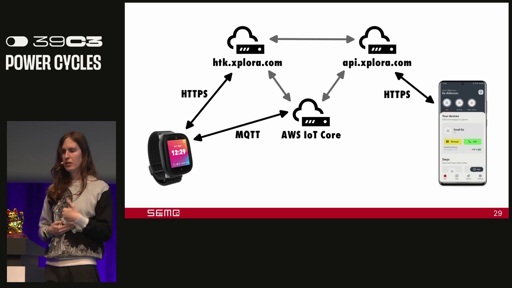


Question to all of you: is it possible to use own tracks to monitor on a mobile phone and cache the location there and only once a month, you boot the server that own tracks is connected to (and it syncs then)?