

10·
4 hours agoI’m certainly no great fan of Mnangagwa, but this certainly seems to be a great move for the country and its future prosperity.
I’m certainly no great fan of Mnangagwa, but this certainly seems to be a great move for the country and its future prosperity.
I wonder whether this will provide a stabilizing influence on the region, after the exit of Burkina Faso, Mali and Niger.
The key is simply ensuring that Ukraine survives whatever Putin’s planning next. This sell-off might be to fund a troop surge. There’s zero chance that Putin loses the war without at least attempting a general mobilization first. Regardless of how badly it would have the potential to backfire, it’s definitely a desperation tactic that Putin will at least attempt before admitting defeat. Ukraine’s strategy is working at the moment, but in much the same way that Ukraine attacking Russia’s economic resources is putting Russia under pressure, Russia stretching Ukraine’s manpower could put Ukraine under pressure.
In the recent drama between Fedorov and Syrskyi, one of the things Syrskyi mentioned at his dismissal was how complicated troop procurement has been. The West can loan Ukraine money, but it can’t help with Ukraine’s manpower. So whether or not Ukraine’s drone strategy can still neutralize Russia’s manpower advantage if Russia issues a general mobilization order is a question I’ve been worrying about.
From OP’s article:
Earlier, reports emerged that Russia’s central bank has reduced its gold holdings for a sixth consecutive month, selling 43.5 metric tons since January in the largest six-month drawdown recorded in at least a quarter-century.
The sales came as Russia’s federal budget deficit approached 6 trillion rubles (more than $76 billion) during the first half of the year.
So we know how much gold was sold, but I couldn’t tell you how much is left.

Too late. I’ve already switched to Linux Mint and am never going back.

There’s a difference between calculating the necessary tensile strength of a chain and calculating how much energy would be required to make a chain of that tensile strength. For example, if an undiscovered element is required, does that mean it would need to be generated from nothing, so to speak, with a particle accelerator? How much energy would that take for a cosmically large chain? Or are we to assume that a massive asteroid composed entirely of this miracle material will simply pass Earth closely by?
Generally speaking, thought experiments need to yield useful conclusions before they’re worth publishing. Even if your “mithril” could exist, this thought experiment doesn’t even cover the question of whether this system of chains would yield enough energy to justify the amount of energy that would be spent creating and maintaining this cosmic-scale mechanism. And wouldn’t the “biological organisms” be constantly spending colossal amounts of energy just to prevent these chains from ripping away from their anchor points?
And not all types of energy are equal. Energy needs to useful. Even if this system could be created at an energy profit, how would we harness that energy towards useful ends? Would the energy be used to somehow boil water to turn a dynamo to generate electricity? Does enough water even exist on Earth to be put to that purpose? We can currently cause fusion reactions if we want to, but the problem is harnessing them towards useful purposes. We don’t need to invent an even bigger bomb.
That’s not a revolution.

That would matter in a criminal prosecution where guilt must be proven beyond all reasonable doubt. However in a civil suit, all the BBC needs to do is convince a jury.
If you insist that strict capitalism has never failed because neither the USA nor any other Western nation has ever practiced pure unadulterated capitalism, then you necessarily have to accept that strict Marxism has never failed either, because neither the USSR nor any other communist nation has ever practiced pure unadulterated Marxism.
If Trump refuses discovery it would be a huge payout for the BBC, not from them
I’d be shocked if the BBC’s defence didn’t include a countersuit to the effect that his original suit calling them liars amounted to defamation. Trump can drop his suit but has no control over whether the BBC can file or continue a countersuit.

Even when they wear badges they always have some strap or other piece of gear obscuring the badge number.
Ukraine already has conscription, so that doesn’t make much sense.
I didn’t say the country doesn’t have it; I said the people are resisting it.
https://www.bbc.com/news/articles/cr7k5ngde3vo
Also “the war of attrition” is used to keep losses low, so what do you mean Ukraine can’t afford it?
I mean that with the difference in population size, Russia can better afford to lose many than Ukraine can afford to lose even a few. So regardless of how many headlines we get telling us how well drones are doing, if Ukraine loses any soldiers at all then it needs to be able to recruit more.
On Monday, Syrskyi wrote an op-ed for the Militarny website, saying of his relationship with Fedorov: “I perceived our relationship as a working one… If I offended anyone, Mykhailo Albertovych [Fedorov], I’m sorry.”
He said the issues of military contracts, procurement and mobilisation were a great deal more complicated than most people realised.
We’re seeing that Ukrainians are resisting conscription, so if Ukraine is to persist, it needs to prioritize manpower, both in the acquisition of more manpower and the prevention of losses. I’m just concerned that civilians, especially we civilians who live nowhere near the war, are overly enamored with the idea that drone strikes are winning the war when in reality Ukraine can’t afford a war of attrition.
I can only imagine two possible reasons:
If Infantino thinks he might be forced out of the FIFA job soon
If the UN job has greater potential for bribes
I’ll give that a try, thanks!
Not the person you’re responding to but if I wanted to turn an old Asus MeMO Pad 7 into something I could stream from my PC with, would you advise me to install Postmarket OS, LineageOS, something else?
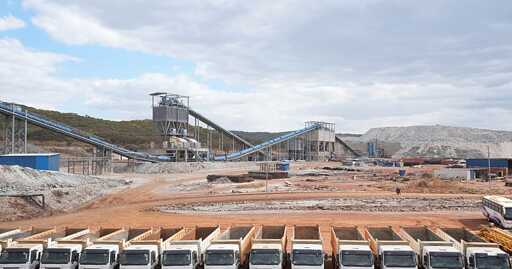







Zimbabwe was already mining the lithium, so the environmental damage was already happening. What’s new here is that it’s now processing it locally. This means Zimbabwe gets a bigger percentage of the money that’s made from this lithium. A nation’s resources should be profitable primarily to itself.
Additionally, exporting for processing is more environmentally damaging than doing it locally because when you export, then in addition to whatever damage is done by processing, you also get all the environmental damage that comes from all that transportation. Eliminating the transportation at least removes one unnecessary element of environmental damage in an industrial chain that would exist one way or the other.