I for sure will get downvoted for this. But the glasses are not the problem, it’s the potential misuse. There are actually lots of applications where augmented reality comes in handy, as for example heads up information related to instructions, or, for example, in a much earlier time, people with, e.g., autism, got a feedback with an emoji, what the mood of the other person was. Or, for example, reading sign language without having thousands of hours spent on that. There are so many useful applications and people are just censoring the technology like they would censor the way now it’s mandatory to check for ID’s. I really get the idea, that mass surveillance is bad. No discussion about that. But cameras can be used in a good way. The problematic thing is, that you don’t really can’t tell if somebody is recording you or just using it neatly. But that’s the same with smartphones. Everytime somebody is holding his/her smartphone up, doing something, I also think “is he/she recording me right now? Nah, it’s probably just used properly…”
Except they aren’t designed to be used that way or marketed that way. Just because they could be useful in certain niche scenarios doesn’t mean most of them are used that way. Also, sign language is too complex for accurate translation using cameras like this. It utilizes facial expressions and space to determine context and intention.
But it was just an example. When I thought of those glasses with cameras on them, I thought “oh, AR glasses”! I just realized recently that lots of cheaper glasses don’t have a display, just the cameras.
Are these Meta glasses even AR? AFAIK they are just regular glasses/sunglasses with a camera, mic, and headphones in them so you can listen to music, record video, and use voice controls with your smartphone. There’s no display.


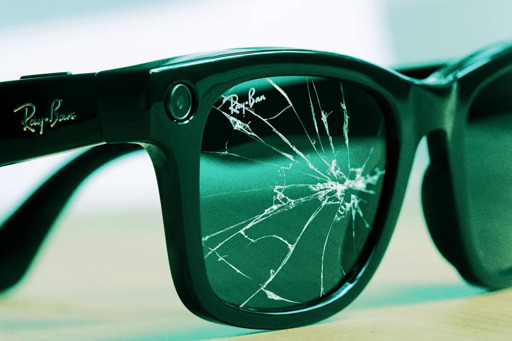
I for sure will get downvoted for this. But the glasses are not the problem, it’s the potential misuse. There are actually lots of applications where augmented reality comes in handy, as for example heads up information related to instructions, or, for example, in a much earlier time, people with, e.g., autism, got a feedback with an emoji, what the mood of the other person was. Or, for example, reading sign language without having thousands of hours spent on that. There are so many useful applications and people are just censoring the technology like they would censor the way now it’s mandatory to check for ID’s. I really get the idea, that mass surveillance is bad. No discussion about that. But cameras can be used in a good way. The problematic thing is, that you don’t really can’t tell if somebody is recording you or just using it neatly. But that’s the same with smartphones. Everytime somebody is holding his/her smartphone up, doing something, I also think “is he/she recording me right now? Nah, it’s probably just used properly…”
Except they aren’t designed to be used that way or marketed that way. Just because they could be useful in certain niche scenarios doesn’t mean most of them are used that way. Also, sign language is too complex for accurate translation using cameras like this. It utilizes facial expressions and space to determine context and intention.
Another comment mentioned meta glasses don’t have AR. I stand corrected.
Regarding your sign language comment, I’m no sure. For example, here is an article of AR glasses being able of doing that: https://deafvibes.com/ai-and-accessibility-technologies/smart-glasses-meet-sign-language/
But it was just an example. When I thought of those glasses with cameras on them, I thought “oh, AR glasses”! I just realized recently that lots of cheaper glasses don’t have a display, just the cameras.
Are these Meta glasses even AR? AFAIK they are just regular glasses/sunglasses with a camera, mic, and headphones in them so you can listen to music, record video, and use voice controls with your smartphone. There’s no display.
Ok, I see. I thought the backlash is about all smartglasses in general, including AR glasses.